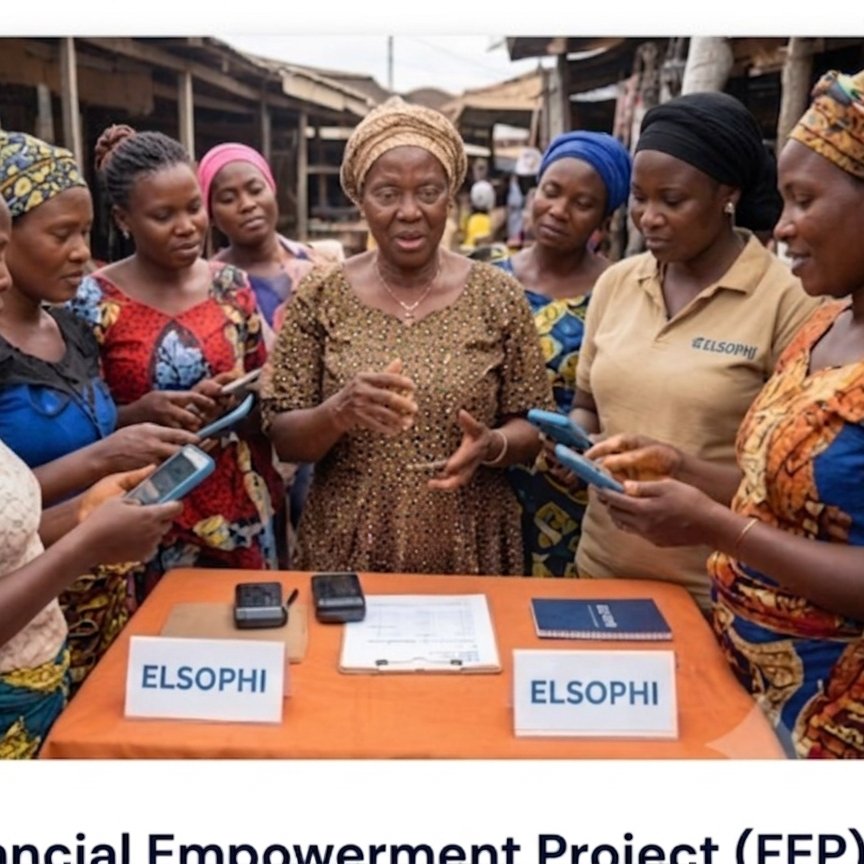
Financial Empowerment Project (FEP)
Pillar 3 | Financial Empowerment Project (FEP)
Building livelihoods that last — from survival to sustainable growth.
The Challenge
Economic vulnerability is both the cause and consequence of poor education and health outcomes. In the communities ELSOPHI serves, women in particular face a double barrier: exclusion from formal financial systems and exclusion from digital tools that are increasingly central to economic participation. Without access to capital, skills, and markets, micro and small businesses remain fragile, and families remain trapped in intergenerational poverty.
Our Approach
FEP takes a multi-layered approach to economic empowerment, addressing income, assets, skills, and systemic inclusion:
• Poverty Reduction through Micro-Enterprise Development (PRIME-Dev) Poverty Graduation Model: Our flagship innovation is PRIME-Dev, a scalable, technology-enabled poverty graduation model that provides formalisation support for micro and small businesses while bridging the digital and financial inclusion gap between women and men in Nigeria. PRIME-Dev leverages digital platforms to connect women entrepreneurs to markets, financial services, and business development support.
• Business Startup Grants: We have supported over 500 women with small business startup grants of $125 each, providing the capital injection needed to establish or stabilise micro and small enterprises.
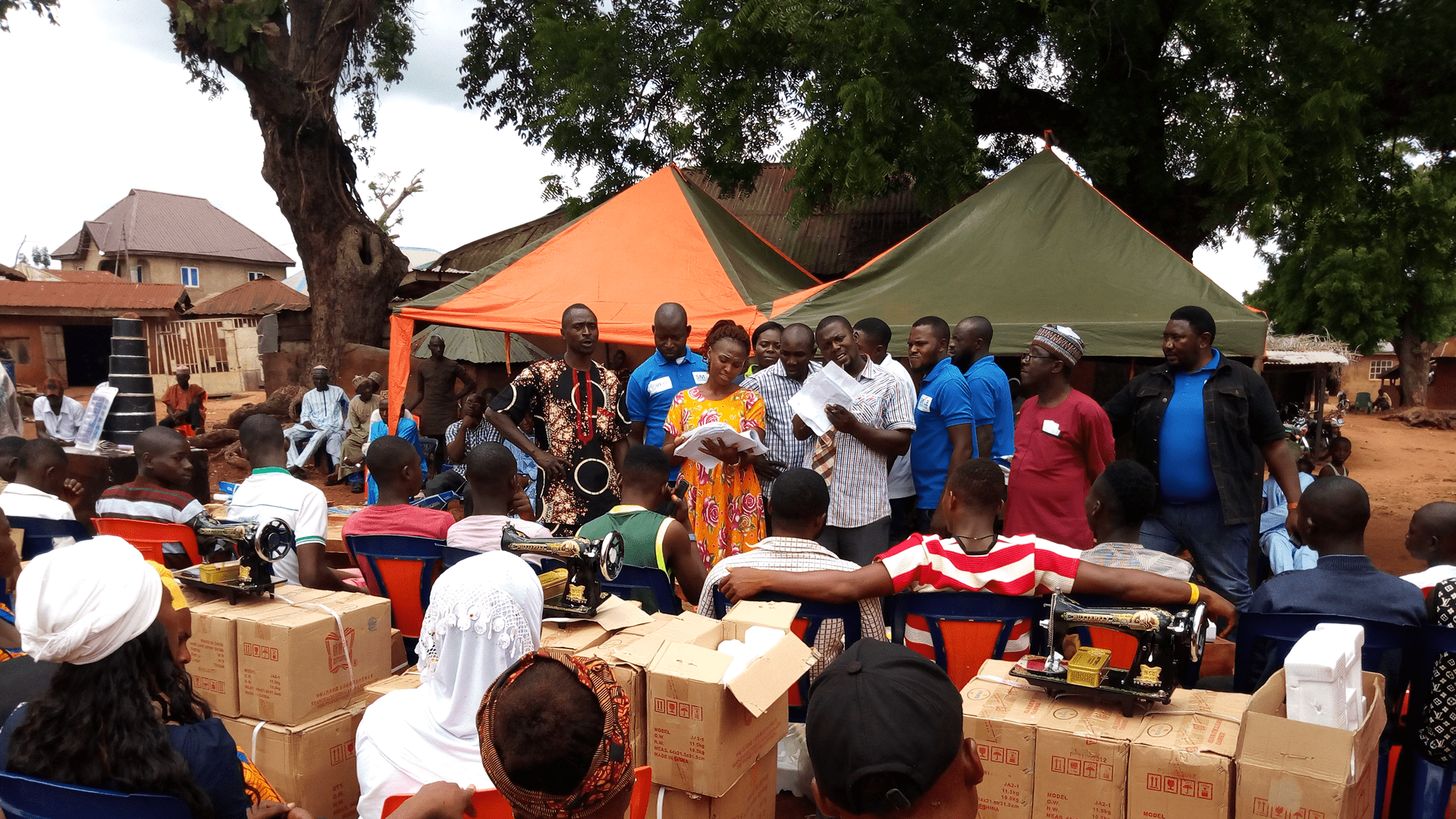
• Vocational Training and Startup Kits: We have graduated 150 girls and boys from vocational training programmes, providing them with startup kits to begin their chosen vocation with the tools they need to succeed immediately.
• Agricultural Livelihoods: We have supported farming women and men with improved inputs — including vitamin A-fortified cassava seedlings and orange-flesh sweet potato seedlings — to strengthen food security and income from agriculture.
• Gender Education and Social Norm Change: We have provided gender education for 1,500 women and men, challenging the social norms that restrict women’s economic participation and building the household-level enabling environment for women’s empowerment.
• Climate Action Through Livelihoods: We have supported 1,500 women and men to plant 1,500 economic trees, integrating climate resilience into our livelihood programming and generating long-term income from agroforestry.